Geometric Laser Alignment
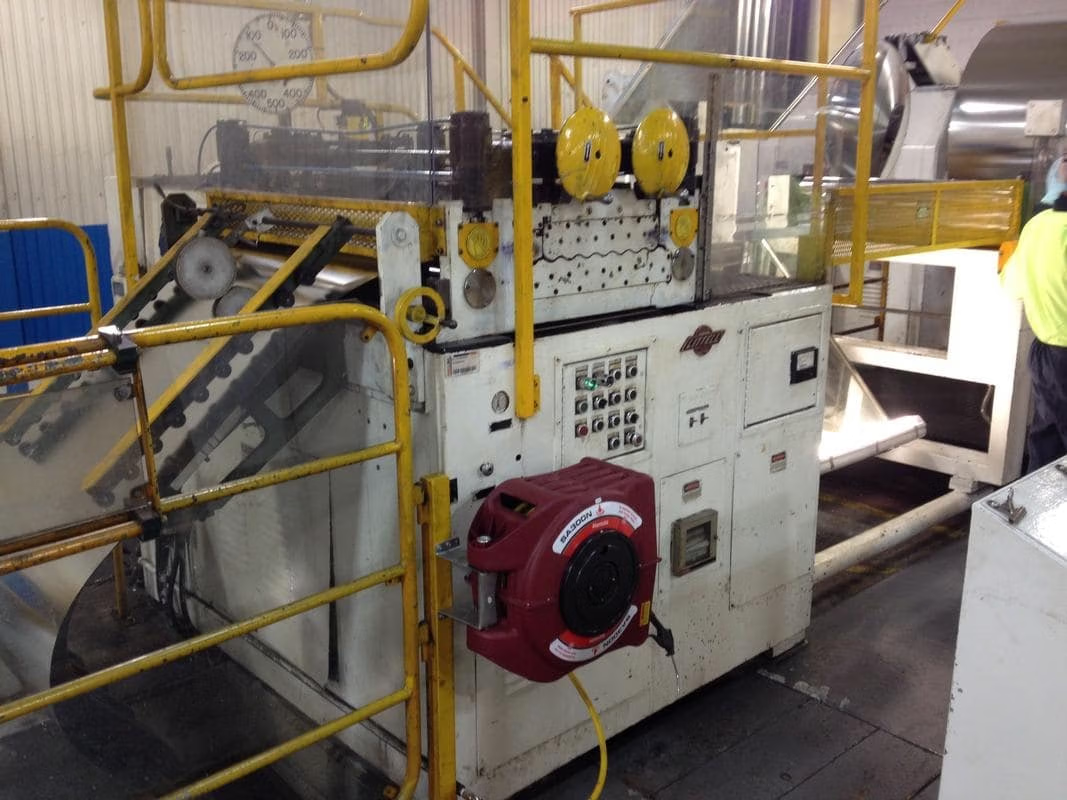
CASE STUDY: Geometric Laser Alignment — Tin Can Production Slitting Machine
Industry: Metal Packaging / Can Manufacturing Services: On-Site, Geometric Laser Alignment, Precision Machining, Foundation Repair Equipment: Industrial Slitting Machine — Rolls, Cutters, Machine Foundation Assembly
The Situation
A can manufacturer approached Qualtex about persistent accuracy problems with the slitting machine used in their tin can production line. The issues were ongoing and the root cause hadn’t been identified. Qualtex was asked to recommend an approach to investigate and resolve them.
The Challenge
Accuracy problems on a slitting machine can stem from several sources — worn tooling, misaligned rolls, or movement at the foundation level. Without a systematic diagnostic process, there was a real risk of chasing symptoms rather than the cause. The client needed a methodical approach that would either confirm or rule out each possibility before any remedial work was committed to.
What Qualtex Did
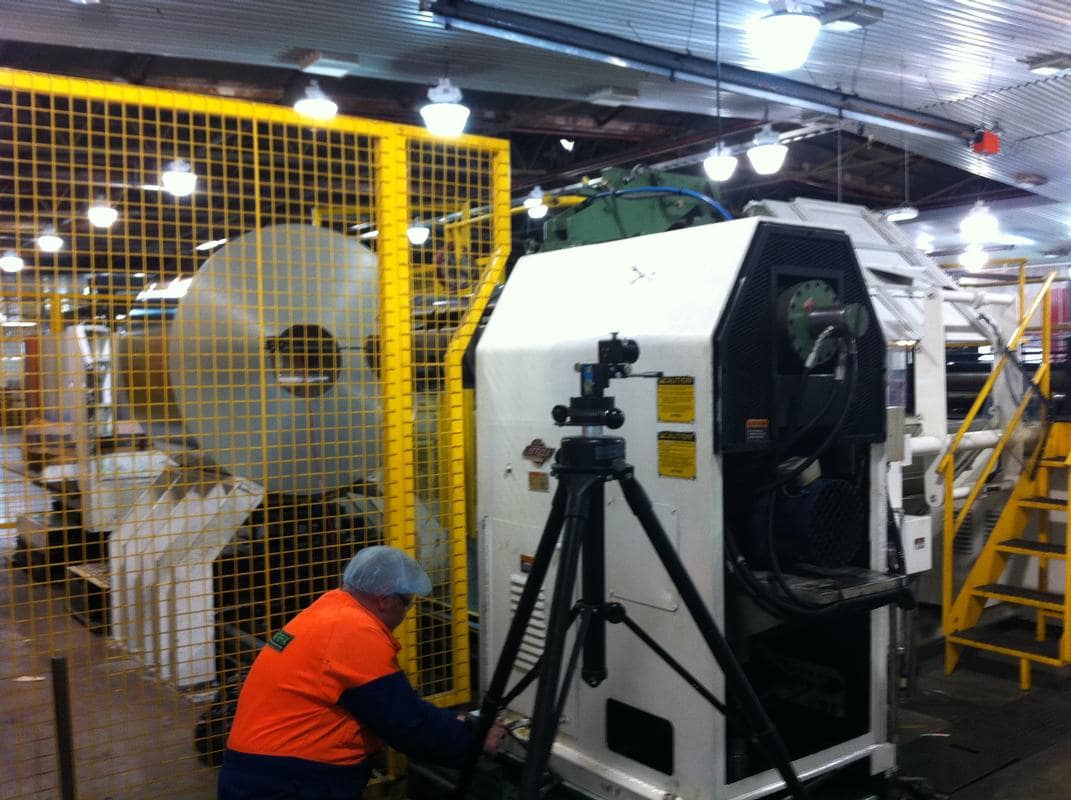
Working alongside the client’s own technicians, a decision was made to carry out a series of geometric alignment tests to check for machine movement at the foundation. Precision laser alignment equipment was set up and initial measurements taken across the machine geometry. Adjustments were made to bring the rolls and cutters within recommended tolerances.
Subsequent alignment checks revealed the real problem: the machine foundation integrity was compromised. The machine was lifted to allow the original foundation hold-down sleeves to be extracted. Qualtex machinists manufactured new threaded sleeves, which were chemically anchored into the parent foundation material. The machine was then lowered back into position and precisely re-aligned.
All work was scheduled around planned plant outages to keep production losses to a minimum.
The Outcome
With the foundation restored and the machine correctly aligned, accuracy improved measurably — reducing material waste and lifting the quality of the finished product. What had presented as a machine problem was, at its root, a foundation problem, and the geometric laser alignment process provided the evidence needed to identify and fix it correctly. The client now has a documented alignment baseline and a machine that is properly anchored and set up for consistent, accurate production.